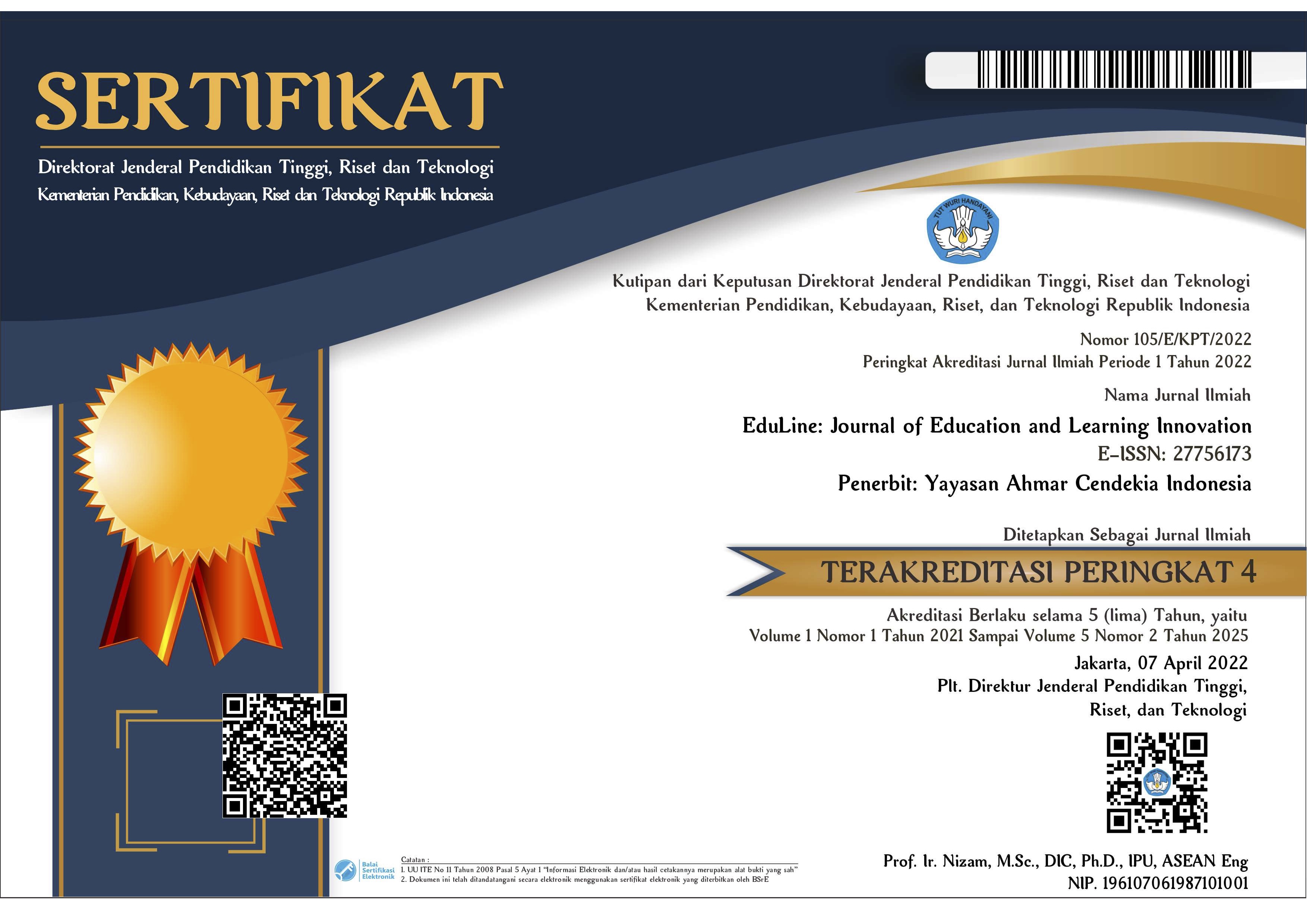
Implementation of Differentiated Learning at TK Islam Plus E-School
- Publication History
- Published online: December 30, 2023
- DOI
- https://doi.org/10.35877/454RI.eduline2174
- Copyright
- Copyright (c) 2023 Sitti Nurhidayah Ilyas, Angri Lismayani
Abstract
This study aims to determine the description of the implementation of differentiated learning based on the aspects of KPPLB EPEC: (a) content (b) process (c) product and; (e) learning environment in Islamic Kindergarten Plus E~School Pinrang. This type of research is qualitative-descriptive. In collecting data, the researcher acted as a research instrument. Data were obtained through two sources, namely informants and documents. Data collection techniques were carried out through observations on videos of learning activities, interviews and documentation. The data obtained were then analysed using the concept of Miles and Huberman. Data validation was carried out by data credibility test, transferability test, dependability test and confirmability test. The results of the study are expected to describe the applicative stages or steps taken by teachers in the implementation of differentiated learning. This study focused on getting an overview of the differentiated learning process by analysing the teaching modules developed based on the results of diagnostic assessments conducted by teachers, learning implementation as well as teacher evaluation and reflection as a basis for developing further teaching modules.
Keywords
References (14)
- Ayu Sri Wahyuni. (2022). Literature Review: Pendekatan Berdiferensiasi Dalam Pembelajaran IPA. JURNAL PENDIDIKAN MIPA, 12(2), 118–126. https://doi.org/10.37630/jpm.v12i2.562
- Budiarti, E., Anshoriyah, S., Krisnova Levryn, P., Annisa, N., & Abidah, N. (n.d.-a). Asesmen Dan Laporan Hasil Belajar PAUD Pada Kurikulum Merdeka.
- Budiarti, E., Anshoriyah, S., Krisnova Levryn, P., Annisa, N., & Abidah, N. (n.d.-b). Asesmen Dan Laporan Hasil Belajar PAUD Pada Kurikulum Merdeka.
- Wahyuningsari, D., Mujiwati, Y., Hilmiyah, L., Kusumawardani, F., Sari, I.P. (2022). Pembelajaran Berdiferensiasi Dalam Rangka Mewujudkan Merdeka Belajar. Jurnal Jendela Pendidikan, 2 (4), 529-535. https://doi.org/10.57008/jjp.v2i04.301
- Efrina, E., & Kusumastuti, G. (2019). Differentiated Learning for Students with Special Needs in Inclusive Schools.
- George S Morrison, & Febrianti Ika Dewi. (2012). Dasar-Dasar Pendidikan Anak Usia Dini ( PAUD ). Jakarta Barat PT. Indeks.
- Suardipa, I. (2020). Proses Scaffolding Pada Zone Of Proximal Develeopment (ZPD) Dalam Pembelajaran. Widyacakra ;Jurnal Pendidikan, Agama dan Budaya, 4 (1), 79-92. https://doi.org/10.55115/widyacarya.v4i1.555
- Lodge, J. M., Hansen, L., & Cottrell, D. (2016). Modality preference and learning style theories: rethinking the role of sensory modality in learning. Learning: Research and Practice, 2(1), 4–17. https://doi.org/10.1080/23735082.2015.1083115
- M. Tucker, A., & Stern, Y. (2011). Cognitive Reserve in Aging. Current Alzheimer Research, 8(4), 354–360. https://doi.org/10.2174/156720511795745320
- Mahfudz. (2023). Pembelajaran Berdiferensiasi dan Penerapannya. SENTRI: Jurnal Riset Ilmiah. 2 (2). 533-543
- Munif, C. (2009). Sekolahnya Manusia, Sekolah Berbasis Multiple Intelligences di Indonesia. Kaifa Mizan Pustaka.
- Rahmah, S., Dalila, A. A., Liliawati, W., & Setiawan, A. (2022). Pendekatan Pembelajaran Diferensiasi dalam Model Inkuiri terhadap Kemampuan Numerasi Siswa. Jurnal Imiah Pendidikan Dan Pembelajaran, 6(2), 393–401. https://doi.org/10.23887/jipp.v6i2.50838
- Semarang, U. N., Studi, P., & Pengembangan, M. (n.d.). Prosiding Seminar Nasional Pascasarjana Literature Review : Peran Guru dalam Membangun Ketrampilan 4C Siswa dengan Pembelajaran Berdiferensiasi Renny Nur Afida*. http://pps.unnes.ac.id/pps2/prodi/prosiding-pascasarjana-unnes
- Semarang, U. N., Zumayyah, A., Kurniawati, Y., Pranoto, S., & Nuzulia, S. (n.d.). Prosiding Seminar Nasional Pascasarjana Ruang Belajar Anak Seraya Bermain Yang Menarik Untuk Anak Usia Dini: Literature Review. http://pps.unnes.ac.id/pps2/prodi/prosiding-pascasarjana-unnes